
Solar in winter
Do solar panels work in winter, snow and cold?
How cold, snow, clouds and short days affect solar in Oregon, with month-by-month production data for cities across the state.
- Oregon-owned since 2009
- 3,500+ systems installed
- Updated November 4, 2026




The short answer
Yes. Cold actually helps: solar panels are more efficient at low temperatures. What limits winter output in Oregon is short days, a low sun angle and snow cover. A kW of panels in Portland makes about 36 kWh in December versus 160 in July, and in Bend about 63 versus 177 (NREL). Snow usually slides off tilted, dark panels within a day or two of sun, and net metering carries summer surplus forward to cover winter bills.
Updated
- Cold weather
- Makes panels more efficient
- What actually limits winter
- Short days and low sun
- Portland, December
- 36 kWh per kW (July: 160)
- Bend, December
- 63 kWh per kW (July: 177)
- Snow
- Usually slides off within a day or two of sun
- Winter bills
- Net metering banks summer credit
By city
How much solar makes in an Oregon winter
| City | December (kWh per kW) | July (kWh per kW) | December as % of July | Dec to Feb share of the year |
|---|---|---|---|---|
| Portland | 36 | 160 | 23% | 11% |
| Salem | 37 | 166 | 22% | 12% |
| Eugene | 36 | 156 | 23% | 12% |
| Astoria | 32 | 139 | 23% | 13% |
| Bend | 63 | 177 | 36% | 15% |
| Medford | 50 | 169 | 30% | 14% |
| Klamath Falls | 69 | 183 | 38% | 16% |
Portland
- December (kWh per kW)
- 36
- July (kWh per kW)
- 160
- December as % of July
- 23%
- Dec to Feb share of the year
- 11%
Salem
- December (kWh per kW)
- 37
- July (kWh per kW)
- 166
- December as % of July
- 22%
- Dec to Feb share of the year
- 12%
Eugene
- December (kWh per kW)
- 36
- July (kWh per kW)
- 156
- December as % of July
- 23%
- Dec to Feb share of the year
- 12%
Astoria
- December (kWh per kW)
- 32
- July (kWh per kW)
- 139
- December as % of July
- 23%
- Dec to Feb share of the year
- 13%
Bend
- December (kWh per kW)
- 63
- July (kWh per kW)
- 177
- December as % of July
- 36%
- Dec to Feb share of the year
- 15%
Medford
- December (kWh per kW)
- 50
- July (kWh per kW)
- 169
- December as % of July
- 30%
- Dec to Feb share of the year
- 14%
Klamath Falls
- December (kWh per kW)
- 69
- July (kWh per kW)
- 183
- December as % of July
- 38%
- Dec to Feb share of the year
- 16%
NREL PVWatts, south-facing 20° tilt, 14% system losses, at each city's coordinates. Your roof's direction and shading change the numbers.
Cold
Why cold isn't the problem
Solar panels convert light, not heat, into electricity, and they lose efficiency as they get hot. A typical panel gains a few tenths of a percent of output for every degree Celsius it runs below 25°C (77°F), so a clear, cold January day is efficient solar weather.
The real winter limits are the number of daylight hours and how low the sun sits in the sky. That's why Central and Southern Oregon, with clearer winter skies, keep a larger share of their summer output than the Willamette Valley and the coast.
Snow
Solar panels and snow
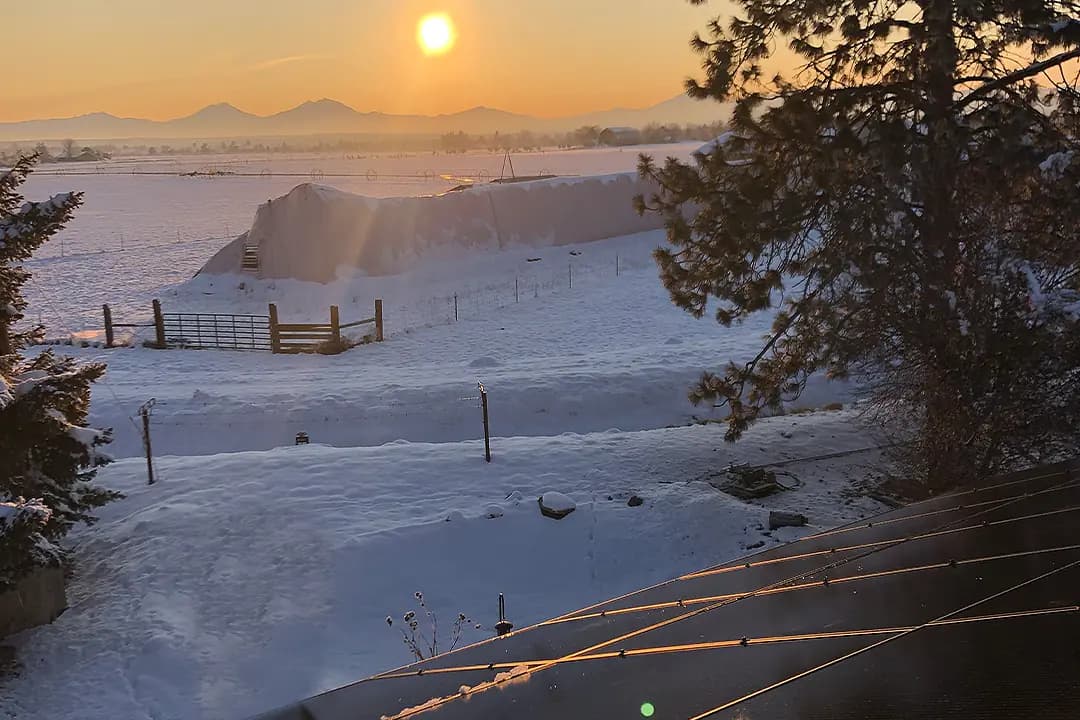
Panels are tilted, smooth and dark, so snow usually slides off within a day or two once the sun comes out. Light snow often melts off first.
Don't climb on the roof or use metal tools, hot water or a pressure washer to clear panels. Scratched glass or a fall costs far more than a few days of lost production.
Snow on the ground can actually boost output on clear days by reflecting extra light onto the panels.
In snowy areas such as Bend, Sisters and La Pine, we design racking for local snow loads, and the permit inspection confirms it.
Clouds
Clouds, rain and fog
Panels still produce under clouds, just less: heavy overcast can cut output to a small fraction of a sunny day, while thin clouds have a much smaller effect. Rain also rinses dust and pollen off the glass.
Winter bills
How net metering covers winter
Oregon systems are usually sized on a full year of usage, not on winter. In spring and summer they make more than the home uses, and PGE and Pacific Power credit that surplus on your bill. Those credits carry forward to winter months, when production is low and electric heating pushes usage up.
Winter outages
Solar during ice storms and winter outages
Grid-tied solar shuts off during a power outage unless the home has a battery. With a battery, solar keeps recharging it every day, though short winter days mean less recharging, so we size winter backup around essentials such as the furnace fan, fridge, lights and well pump.
Why Oregon chooses National Solar
One local team designs, installs, and services every system, backed by Oregon's top solar honors.
Oregon homeowners trust National Solar
Hundreds of 5-star reviews from Bend to the coast, from customers who chose a local team they can still call years after installation.
Year-round solar
See what solar would make on your roof all year
We'll model your roof month by month, including winter, and show how net metering credits cover the darker months.
Solar in winter questions
Straight answers from the local team.
Sources
Updated by the National Solar team.