
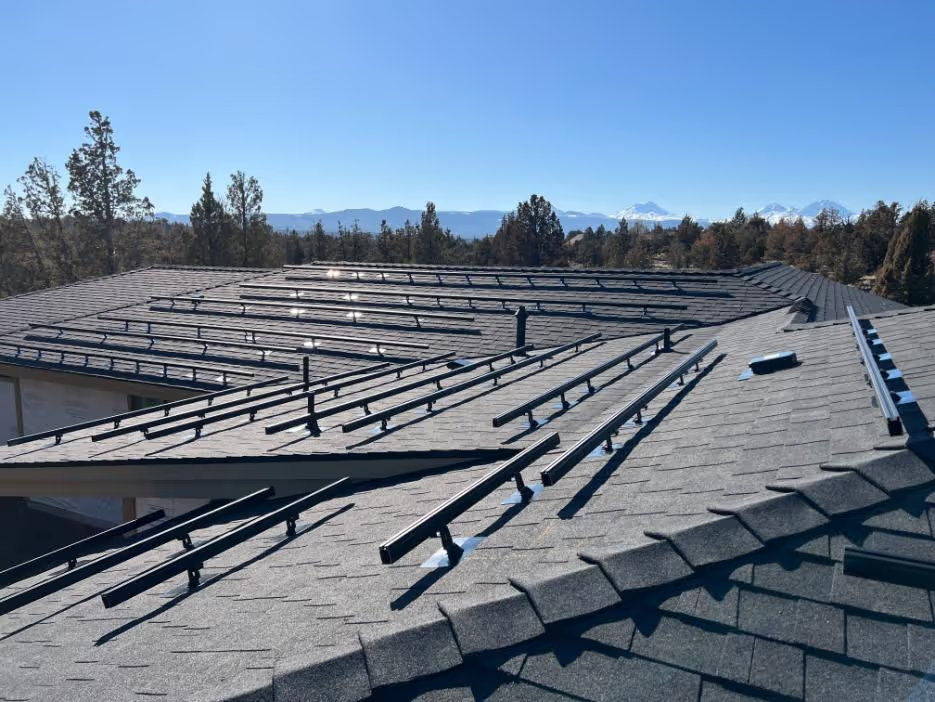
Installation process
How solar panel installation works in Oregon
Every step from first site visit to switching your system on, with realistic Oregon timelines for permits, inspections and utility approval.
- Oregon-owned since 2009
- 3,500+ systems installed
- Updated November 4, 2026






The short answer
A typical Oregon home solar installation takes about 6 to 10 weeks from signed contract to switching on, but only one to three days of work at your home. The steps are: site assessment, design and engineering, permits and the utility interconnection application, installation, the city or county inspection, and the utility's permission to operate. Most of the wait is permits and utility approval, and a good installer handles all of that paperwork, including Energy Trust of Oregon incentives.
Updated
- Contract to switch-on
- About 6 to 10 weeks
- Work on your roof
- Usually 1 to 3 days
- Longest waits
- Permits and utility approval
- Inspections
- City or county, then the utility
- Energy Trust paperwork
- Filed by your installer
- Roof work first?
- Replace an aging roof before solar
Step by step
The 7 steps of a home solar installation
| Step | What happens | Typical timing |
|---|---|---|
| 1. Site assessment | Roof, shading, electrical panel and 12 months of usage reviewed | About an hour on site |
| 2. Design and proposal | System sized to your usage, with incentives and payment options | A few days |
| 3. Engineering | Structural and electrical plans; panel upgrade if needed | 1 to 2 weeks |
| 4. Permits and interconnection | Building and electrical permits; utility interconnection application; Energy Trust reservation | 2 to 6 weeks, varies by city and utility |
| 5. Installation | Racking, panels, inverters or microinverters, wiring and any battery | 1 to 3 days |
| 6. Inspection | City or county building and electrical inspection | Usually within 1 to 2 weeks |
| 7. Permission to operate | Utility installs or reprograms the net meter and approves switch-on | A few days to a few weeks |
1. Site assessment
- What happens
- Roof, shading, electrical panel and 12 months of usage reviewed
- Typical timing
- About an hour on site
2. Design and proposal
- What happens
- System sized to your usage, with incentives and payment options
- Typical timing
- A few days
3. Engineering
- What happens
- Structural and electrical plans; panel upgrade if needed
- Typical timing
- 1 to 2 weeks
4. Permits and interconnection
- What happens
- Building and electrical permits; utility interconnection application; Energy Trust reservation
- Typical timing
- 2 to 6 weeks, varies by city and utility
5. Installation
- What happens
- Racking, panels, inverters or microinverters, wiring and any battery
- Typical timing
- 1 to 3 days
6. Inspection
- What happens
- City or county building and electrical inspection
- Typical timing
- Usually within 1 to 2 weeks
7. Permission to operate
- What happens
- Utility installs or reprograms the net meter and approves switch-on
- Typical timing
- A few days to a few weeks
Timing varies by jurisdiction, utility workload and equipment. Battery and ground-mount projects can take longer.
Oregon specifics
What's different about installing solar in Oregon
Permits come from your city or county. Portland uses an online permit system with a faster prescriptive path for standard rooftop systems; smaller jurisdictions often review on paper.
PGE and Pacific Power customers can receive Energy Trust of Oregon incentives, but the reservation usually has to be in place before installation, so your installer files it during design.
Customers of co-ops and public utilities, such as Central Electric Cooperative or EWEB, follow their own utility's interconnection and incentive rules.
Snow-load and wind-load requirements differ across the state, so racking in Bend or on the coast is engineered differently from a Willamette Valley roof.
Prepare
How to prepare your home
If your roof has less than about 10 years of life left, replace it first. Removing and reinstalling panels later costs more.
Have your last 12 months of electric bills handy so the system is sized to real usage.
Ask whether your main electrical panel can handle solar and, if you want one, a battery or EV charger.
On install day, clear the driveway and the area around the electrical panel, and keep pets inside.
Choosing an installer
What to look for in an Oregon solar installer
An Oregon CCB license and an Energy Trust of Oregon trade ally listing, which you need for Energy Trust incentives.
Its own installation crews, so the company that sells the system is the one that builds and services it.
A written workmanship warranty, and manufacturer certifications for the panels, inverters and batteries it installs.
Clear pricing with no door-to-door pressure, and local reviews you can check.
Built by our crews, across Oregon
See the portfolioOregon homeowners trust National Solar
Hundreds of 5-star reviews from Bend to the coast, from customers who chose a local team they can still call years after installation.
Start step one
Book your free site assessment
We handle design, permits, utility paperwork, Energy Trust incentives and inspections, and our own crews do the installation.
Solar installation questions
Straight answers from the local team.
Sources
Updated by the National Solar team.