How Central and Southern Oregon Farms and Businesses Benefit from Commercial Solar and Battery Backup
Practical guidance for Central and Southern Oregon farms and businesses on commercial solar, battery backup, incentives from Energy Trust and utilities, and steps to go solar while improving resilience.

Why commercial solar makes sense for Central and Southern Oregon
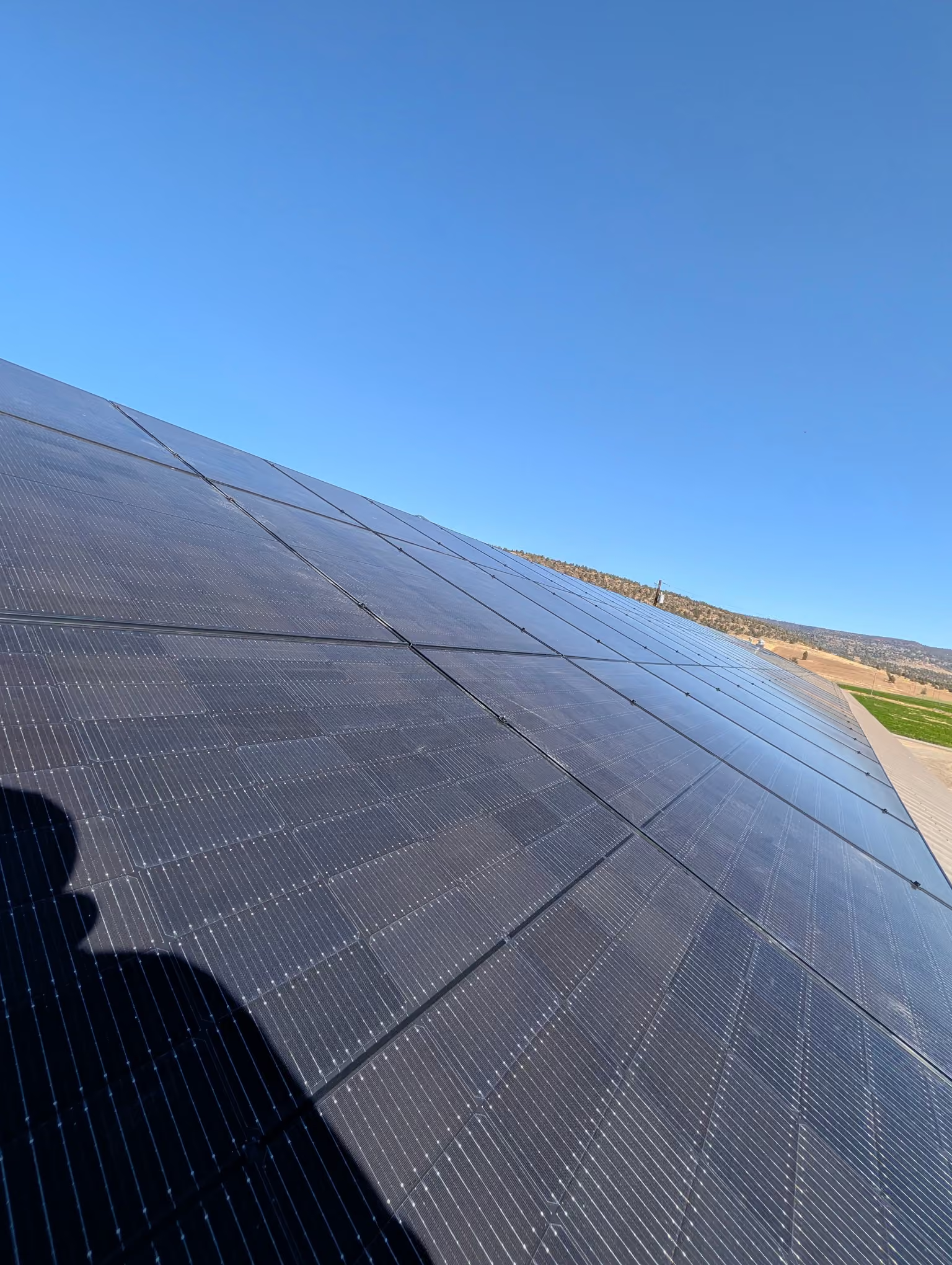
Central and Southern Oregon get strong seasonal sunshine and many clear days, making solar a viable long-term energy source for farms, wineries, processing facilities, dairies, and other commercial operations. Solar reduces exposure to rising utility rates and — when paired with batteries — adds resilience during wildfire-related shutoffs or grid outages.
Common commercial uses on farms and rural businesses
- Irrigation and pumping: Solar can offset daytime pump loads or charge batteries to run pumps during peak periods.
- Cold storage and refrigeration: Reduce energy costs for on-farm processing, storage, and commercial refrigeration.
- Processing and packaging: Power ovens, conveyors, and other equipment while managing demand charges.
- EV charging and fleet electrification: Add on-site charging for trucks, tractors, or employee vehicles.
- Remote facilities and resiliency: Batteries paired with solar keep critical systems running during outages.
How incentives and utility programs work in Oregon
Oregon offers a mix of federal, state, and utility-level incentives that can improve project economics. Key programs to consider:
- Federal incentives: Commercial projects may qualify for federal solar tax provisions and accelerated depreciation. Talk to your accountant or tax advisor to understand current tax code treatment and eligibility.
- Energy Trust of Oregon: Energy Trust has historically offered cash incentives for solar projects for PGE and Pacific Power customers. Program details change over time, so confirm current availability and application steps.
- Local utility programs: Pacific Power and Portland General Electric (PGE) offer interconnection and net-metering or export-credit options that affect how much you save. Some utilities also offer demand response or time-of-use rate programs.
- USDA and agricultural programs: Agricultural producers may be eligible for federal grants or loan guarantees designed to help rural businesses invest in renewable energy. Check current USDA programs and eligibility rules.
Note: Incentive programs, eligibility, and rates change. Confirm all incentives, tax credits, and utility rules with the program administrators and your financial advisor before making decisions.
Design considerations for farms and commercial properties
Every agricultural property is different. A well-scoped project will evaluate:
- Energy profile: Hourly electricity use, peak demand, seasonal patterns for irrigation or processing.
- Site conditions: Roof age and load capacity, available ground space, orientation, shading, and access for equipment and maintenance.
- Interconnection: Local utility service point, meter type, and any distribution upgrades required for larger systems.
- Resilience needs: Whether critical loads (pumps, freezers, lighting) require battery backup or a partial-backup configuration.
- Financing and ownership: Cash purchase, loan, lease, or power purchase agreement (PPA) options — each affects incentives and accounting.
Benefits of adding battery backup
Batteries increase the value of a commercial solar system in several ways:
- Outage resilience: Keep critical equipment running during planned or unplanned outages and Public Safety Power Shutoffs (PSPS) events.
- Demand charge management: Batteries can reduce peak demand on the site, lowering demand charges on bills for many commercial customers.
- Energy shifting: Store midday solar to use during late-afternoon or evening high-rate periods under time-of-use pricing.
Practical next steps for Central and Southern Oregon businesses
- Get a site assessment: A qualified installer will analyze load data, roof/ground potential, and interconnection requirements.
- Request incentive pre-checks: Verify current Energy Trust, utility, and federal program availability early in the planning stage.
- Model economics: Compare project costs, incentives, and projected utility savings. Include battery benefits and maintenance costs.
- Plan for operations: Consider how solar and storage integrate with irrigation schedules, processing shifts, and seasonal demand.
Why work with a local Oregon installer
A local installer understands Oregon utilities (Pacific Power and PGE), regional weather, county permitting, and the operational realities of farms and rural businesses. Working with a licensed, insured company in Bend helps ensure a safe, code-compliant installation and smoother coordination with incentive programs.
How National Solar can help
National Solar has been installing custom solar and battery systems across Oregon since 2009. We provide site assessments, system design, incentive coordination, and battery integration tailored to commercial and agricultural customers in Central and Southern Oregon. Contact us to explore a site visit and get a customized proposal that includes current incentive options.
People also ask
What people ask us about How Central and Southern Oregon Farms and Businesses Benefit from Commercial Solar and Battery Backup
Do farms in Oregon qualify for special agricultural solar incentives?
Farms may be eligible for federal and state programs targeted at rural businesses, including some USDA programs. Eligibility rules vary, so check current program details and speak with a qualified installer or program administrator.
Will a commercial solar system handle irrigation pumps and cold storage?
Yes — properly sized solar plus battery systems can offset or power pumps and refrigeration. A site assessment will evaluate load timing, peak demand, and whether on-site batteries are needed for continuous operation.
How do utility rates and net metering in Oregon affect project savings?
Savings depend on your rate structure, time-of-use pricing, and how your utility credits exported energy. Pacific Power and PGE have different rules, so model savings with up-to-date utility tariff information.
Are there financing options for commercial solar projects?
Yes. Many businesses use loans, leases, or power purchase agreements (PPAs). Financing affects eligibility for some incentives and tax benefits, so review options with your financial and tax advisors.
How long does a commercial solar project take from assessment to commissioning?
Timelines vary by project size, permitting, interconnection, and incentive approvals. A typical commercial project can take several months from assessment to commissioning; larger or grid-upgrade projects may take longer.

Written by
Clint Libby
Bend, OR