

Community solar
Community solar vs. rooftop solar in Oregon
How a community solar subscription compares with panels on your own roof, and which one fits your home.
- Oregon-owned since 2009
- 3,500+ systems installed
- Updated November 4, 2026




The short answer
Community solar lets PGE, Pacific Power and Idaho Power customers subscribe to part of an off-site solar project and get credits on their bill, with no panels and usually no upfront cost. Savings are modest (the Oregon Community Solar Program's own estimate uses about 5%), except for income-qualified households, who get guaranteed savings. Rooftop solar costs more up front, but you own the power it makes for 25 years or more and can add a battery for outages. Renters and shaded homes fit community solar; owners with a sunny roof usually save much more with rooftop.
Updated
- Who can join
- PGE, Pacific Power and Idaho Power customers
- Renters
- Yes, community solar works for renters
- Typical community solar savings
- Modest; program example uses 5%
- Income-qualified subscriptions
- Fees at least 20% lower, no upfront cost
- Contract length
- 10 years or longer
- Backup power
- Rooftop with a battery only
Side by side
How they compare
| Item | Community solar subscription | Rooftop solar (owned or prepaid lease) |
|---|---|---|
| Upfront cost | Usually none | System price, a loan, or a prepaid lease |
| Bill savings | Modest; credits minus subscription fees | Replaces most of the energy you buy |
| Contract | 10+ years with a project manager | You own it, or a fixed lease term |
| Price over time | Fees can rise each year | Fixed once it's paid for |
| Needs a sunny roof | No | Yes, or ground space |
| Renters | Yes | Owner's decision |
| Outage backup | No | Yes, with a battery |
| If you move | Moves with you within your utility's territory | Stays with the home |
| Incentives | Discounts for income-qualified households | Energy Trust incentives; federal credit on leases into 2027 |
Upfront cost
- Community solar subscription
- Usually none
- Rooftop solar (owned or prepaid lease)
- System price, a loan, or a prepaid lease
Bill savings
- Community solar subscription
- Modest; credits minus subscription fees
- Rooftop solar (owned or prepaid lease)
- Replaces most of the energy you buy
Contract
- Community solar subscription
- 10+ years with a project manager
- Rooftop solar (owned or prepaid lease)
- You own it, or a fixed lease term
Price over time
- Community solar subscription
- Fees can rise each year
- Rooftop solar (owned or prepaid lease)
- Fixed once it's paid for
Needs a sunny roof
- Community solar subscription
- No
- Rooftop solar (owned or prepaid lease)
- Yes, or ground space
Renters
- Community solar subscription
- Yes
- Rooftop solar (owned or prepaid lease)
- Owner's decision
Outage backup
- Community solar subscription
- No
- Rooftop solar (owned or prepaid lease)
- Yes, with a battery
If you move
- Community solar subscription
- Moves with you within your utility's territory
- Rooftop solar (owned or prepaid lease)
- Stays with the home
Incentives
- Community solar subscription
- Discounts for income-qualified households
- Rooftop solar (owned or prepaid lease)
- Energy Trust incentives; federal credit on leases into 2027
Which fits
Who should choose which
Choose community solar if you rent, live in an apartment or condo, have a shaded or failing roof, or want clean energy with no upfront cost.
Choose rooftop solar if you own a home with a reasonably sunny roof, plan to stay several years, and want the largest long-term savings or backup power.
Income-qualified households can get guaranteed community solar savings, and also higher Energy Trust incentives for rooftop solar. It's worth pricing both.
Before you sign
Questions to ask a community solar project manager
Is the project listed on the Oregon Community Solar Program's Project Finder? Every approved project must be.
Is the subscription fixed or pay-as-you-go, and how much does the price rise each year?
How much do you estimate I'll save over the whole term, after all fees?
What does it cost to cancel early, and what happens at the end of the contract?
Who maintains the project, and who do I call with billing questions?
Both
Can you have both?
Yes, with a limit. If you already have rooftop solar, you can subscribe to community solar as long as your rooftop system and subscription together don't produce more than your home uses in a year. That suits homes whose roof only fits a partial system.
Why Oregon chooses National Solar
One local team designs, installs, and services every system, backed by Oregon's top solar honors.
Oregon homeowners trust National Solar
Hundreds of 5-star reviews from Bend to the coast, from customers who chose a local team they can still call years after installation.
Own your power
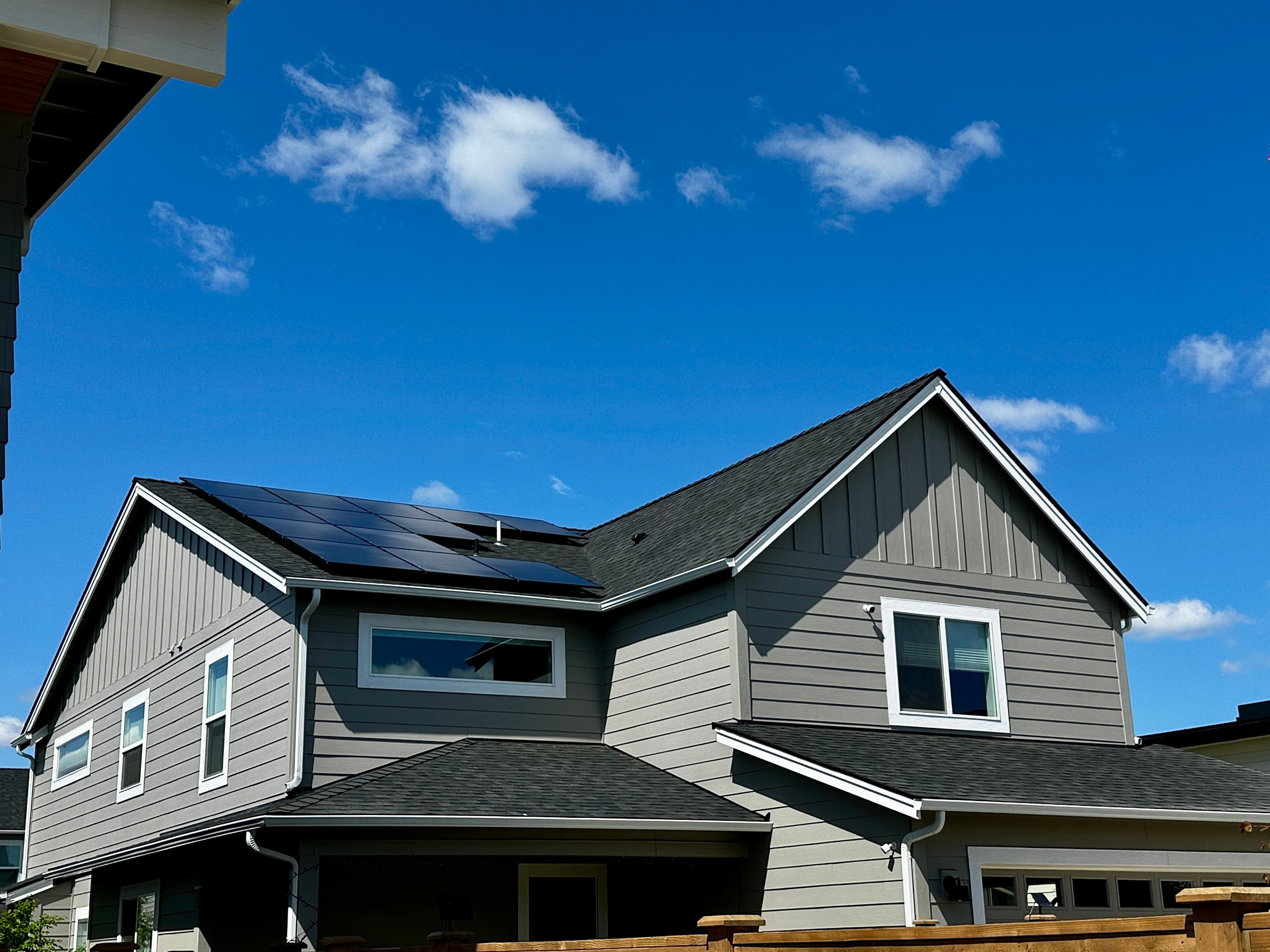
See what rooftop solar would save you
Send us your address and last 12 months of usage. We'll show rooftop solar, a prepaid lease and battery options side by side, so you can compare them with a community solar offer.
Community solar questions
Straight answers from the local team.
Sources
Updated by the National Solar team.
National Solar is not a tax advisor. Federal credit eligibility depends on who owns the system, when construction begins and when it is placed in service. Confirm your situation with a tax professional. Incentive amounts vary by utility and income and are not guaranteed.